It’s 2021, and Egge is a person like many others. He is following a predictable path: he went to school, studied marketing at university, and now works a normal day job in advertising, running around at the fast pace of one of Germany's highly productive cities.
Fast-forward to today, Egge is one of the leading developers in the Cashu ecosystem, producing code used by multiple applications in the Bitcoin space. What happened during this time?
I am a freedom-loving open-source developer, a Bitcoiner, a husband, and most importantly, a father to an amazing little girl.
Egge grew up around technical people. His dad, an electrician and a real do-it-yourselfer, introduced him to gaming from a young age. As a PC gamer, Egge picked up many technical skills along the way, though he never touched code, save for a brief parenthesis during high school.
His journey into development started when Egge wanted to modify the Einundzwanzig community Telegram bot to add useful features. He didn’t wait for someone else to do it. Instead, he rolled up his sleeves, bought an Udemy course on Python, and started exploring the world of coding. He hasn’t stopped learning and building since.
Egge’s history with Bitcoin started differently than that of the average European. “Back in 2021, my PayPal account was banned.” PayPal was one of the most common methods, if not the only one, to get paid online.For someone living in the developed world, this may not seem like a big deal, but that’s not entirely true for the rest of the world. Companies like PayPal have the power to do real damage to individuals – and the worst part is that they don’t even have to justify their choices.
I quickly realized that the arbitrary decision of a single company could have a real impact on my personal life. It was easy to imagine how much worse that kind of dependency must be for people with fewer alternatives or less privilege.
Although he recalls hearing about Bitcoin very early on, during one of his World of Warcraft gaming sessions, he invested neither time nor attention in it, missing his “chance at a pretty nice early retirement.” Even in 2020, his understanding was mostly limited to it being magic internet money.
That PayPal misadventure, which some may consider a blessing, led him at last to take Bitcoin seriously, falling into the rabbit hole and joining the Einundzwanzig community, the largest and most active Germany-based Bitcoin community. Egge started to get involved and quickly became the co-host of its podcast. A member of the community was translating and recording influential Bitcoin posts into German. They asked Egge to record one, and by chance it was Alex Gladstein’s ‘Check Your Financial Privilege’. That piece cemented his conviction even more.
Gladstein’s essay, which was then developed into a book, talks about how unjust the current financial system is, how almost 90% of the world population live under financial repression, and how Bitcoin gives hope to people outside of the financially privileged countries. That was exactly what Egge had personally lived through, even in one of those rich places that dismiss Bitcoin as “rat poison” or “a tool for criminals”.
I believe you cannot dive really deep into Bitcoin without it changing or affecting you in some way.
That encounter set Egge on a new path. Many people feel their values shifting once they meet Bitcoin, and Egge was no exception: “Bitcoin changed the way I view the world, my values, and a big part of my personality. I strongly believe it changed me for the better.”
He started developing software, steadily leaving behind an established career in marketing. He then left the city, the familiar landscape he grew up in, to discover the beauty of the countryside. “Where there used to be neighbors, malls, and cars, there are now forests, farmland, and tractors,” he says. A place where stronger human bonds take root, where his sense of community and companionship has grown manyfold. A place where, he is sure, his daughter will have a family that extends well beyond her bloodline.
We are all in this together. In FOSS, our work benefits one another, and our projects rely not only on their maintainers, but on contributions of all kinds. That can mean code, but also testing, feedback, design work, ‘marketing,’ writing, documentation, and so on.
Working in free and open-source software (FOSS) has profound consequences. The work you do does not only benefit your project, but also the whole ecosystem around it – the projects you build on and the ones building on yours alike. It also comes with uncertainty. He recalls spending night after night working on his Bitcoin side projects, without ever seeing a dime.
Egge has always been able to count on his wife. She stood beside him through the tough times, and through everything that came during his journey.
My wife is my biggest supporter. She was understanding when I worked nights back in the days when I did not earn anything from my Bitcoin work, recorded podcast episodes with Einzunzwanzig, and even when I had to travel to El Salvador on our anniversary.
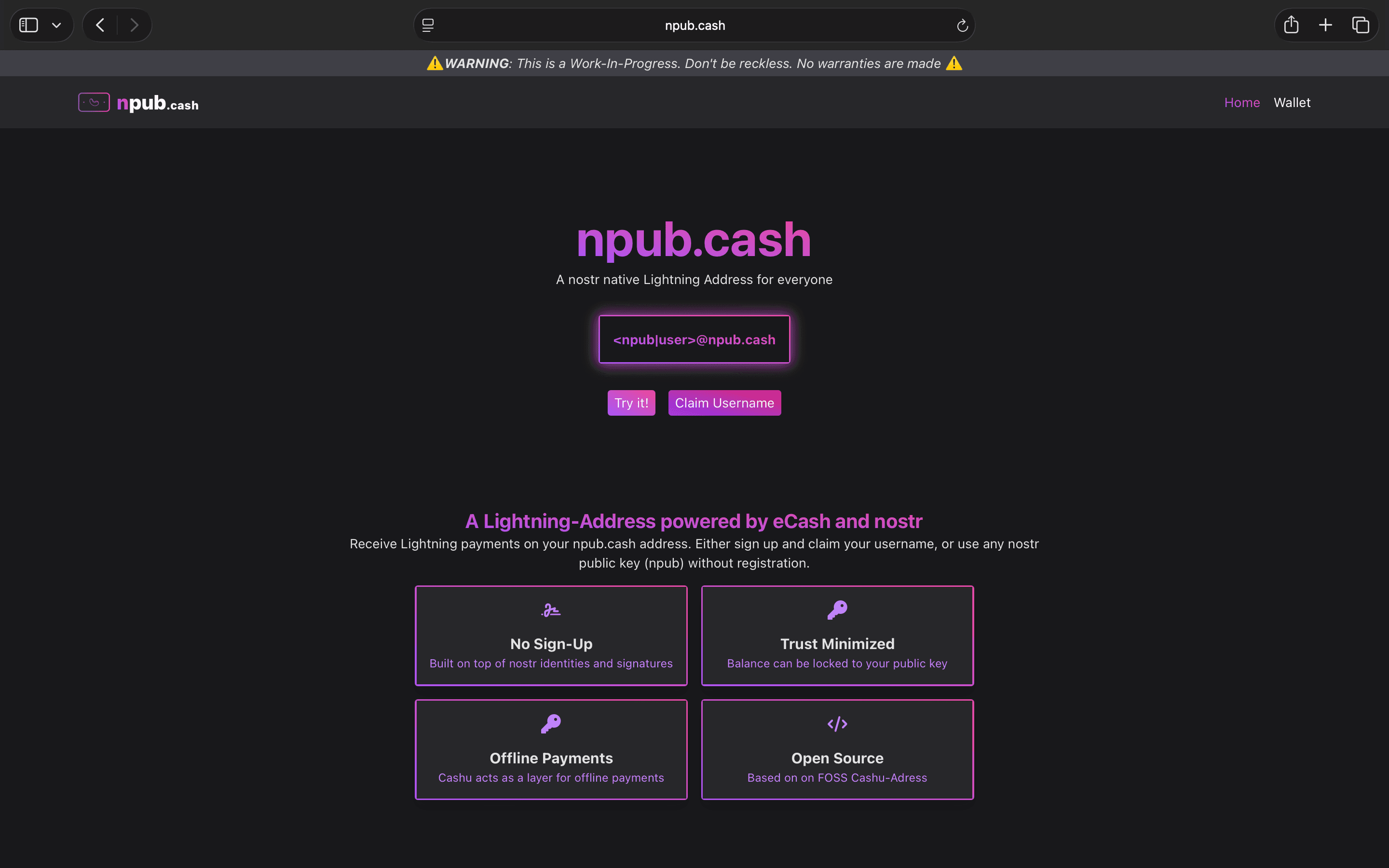
Npub.cash was the venture thatvlaunched Egge’s FOSS career. That work began when he was looking for a way to transform a custodial wallet he and two fellow bitcoiners were building into a non-custodial application.
Combining a local node on a user’s phone with Lightning Address required linking the offline and online worlds. Egge found a solution in the Cashu protocol, which just “turned out to be the perfect bridge between those two worlds”
That same project also helped Egge obtain his first OpenSats grant, a success he recalls as one of the most important moments of his life, one of those occasions worth remembering. “It felt like receiving an accolade. I was at Bitcoin Zitadelle when I got the email, and I immediately had to tell everyone around me.”
Funding is the hard part for any FOSS developer trying to support their own work. FOSS is difficult to monetize by definition, and users often take contributors’ effort for granted. OpenSats made it possible for Egge to finally provide for his family through his work.
That victory wasn’t just financial:
OpenSats helped me realize that my work matters. That appreciation and acknowledgement were incredibly important in helping me fight my imposter syndrome and take the leap of faith into full-time FOSS work.
Egge soon found himself entangled in the dynamics of working in the open – building upon other people’s work, finding gaps and issues, and providing solutions.
His service relied heavily on the TypeScript implementation of the Cashu protocol, cashu-ts. Egge’s experience as a user translated directly into better code, for him and for the entire ecosystem building on it. He quickly spotted gaps and issues in the library and fixed them at the source; no strange workarounds needed to make things work.
The broader Cashu protocol benefited from Egge’s work too: new specifications were merged, such as NUT-17, which defines a way for mints and applications to talk to each other through a single communication channel. His role in the ecosystem grew large enough that Gandlaf, the original architect of cashu-ts, and Calle, the mind behind Cashu, asked him to become maintainer of the library.
Egge had worked on both sides of the line, as a production user first and as an SDK maintainer later. When asked to resurrect a beloved Cashu wallet, eNuts, he quickly understood that even if cashu-ts was a solid toolkit for Cashu operations, building a complete application around it still required deep domain knowledge.
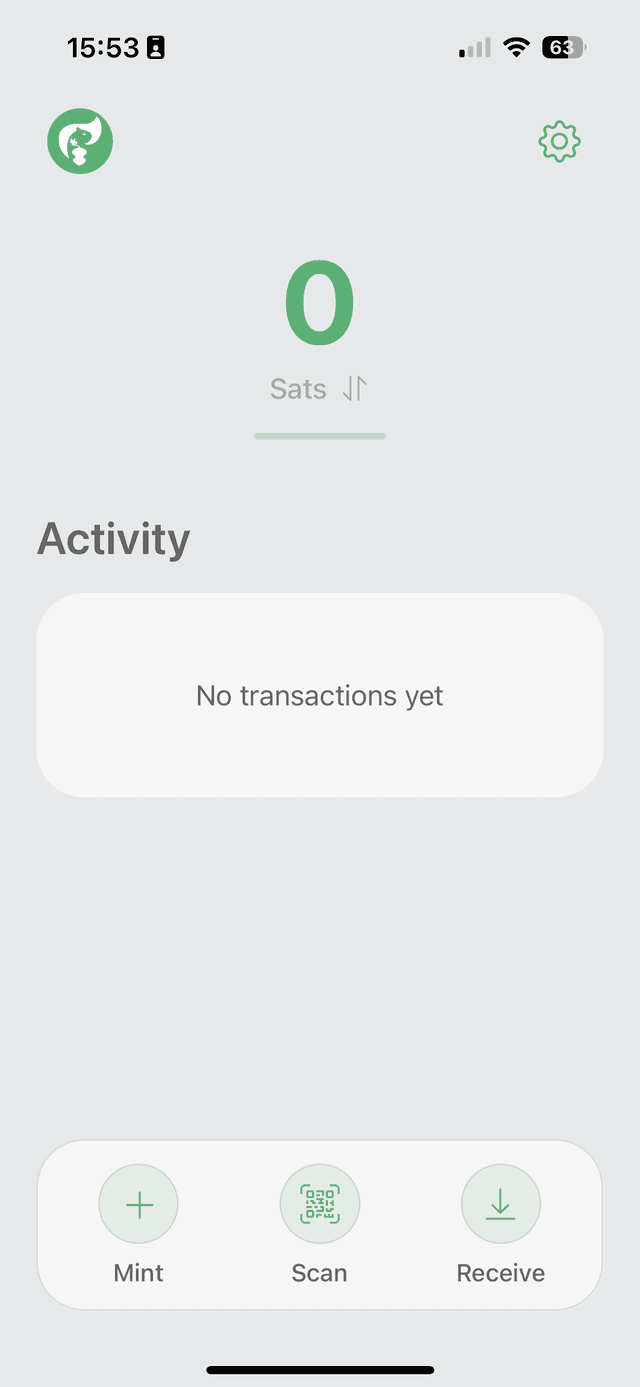
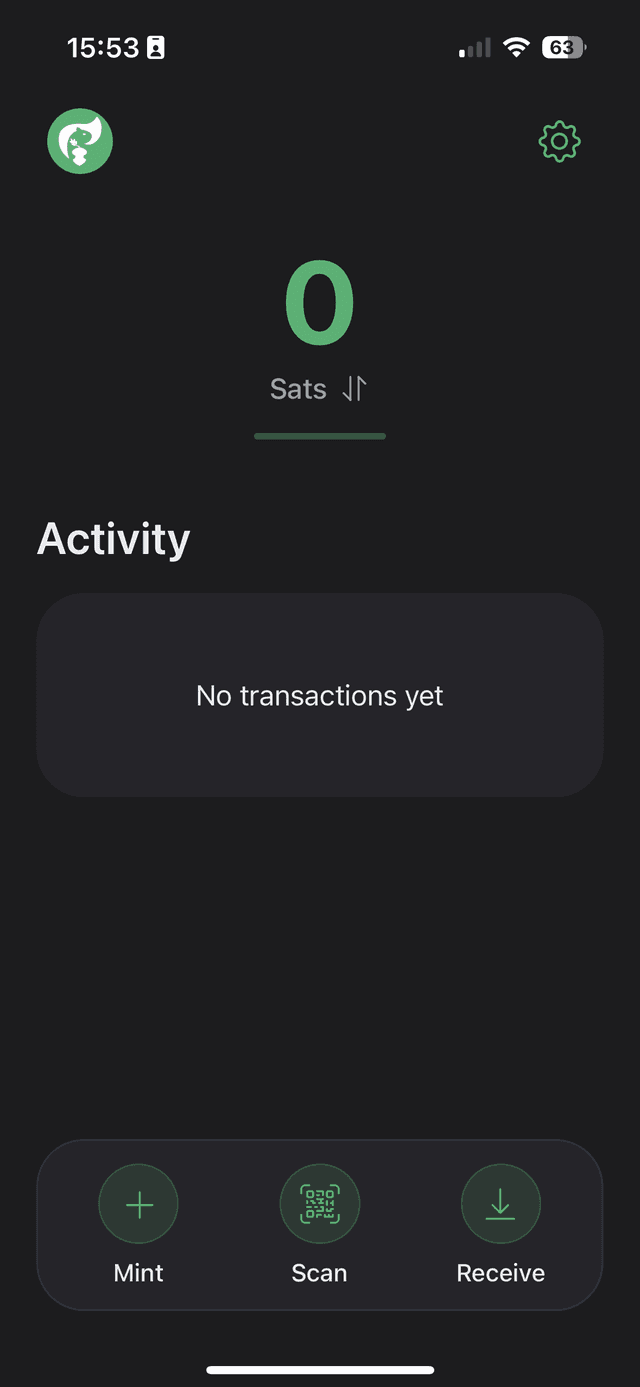
Working on eNuts meant rewriting most of the logic from scratch. The wallet hadn’t been updated for a long time, and was incompatible with the rapidly changing Cashu ecosystem. A tremendous effort for Egge, who decided to make sure that other developers wouldn’t have to go through the same battle by abstracting away much of the complexity into a library. The benefits of FOSS at work, again.
That library, Coco, soon became the main focus for Egge, who recently managed to publish the first production-ready release, a milestone for the TypeScript developer ecosystem around Cashu, and for him personally. Developers can now integrate a fully functional Cashu wallet in any application with just a few lines of code, expanding the reach of the ecosystem by building on Egge’s shoulders. He hopes Coco will lower the entry barrier for developers who want to add Cashu to their apps.
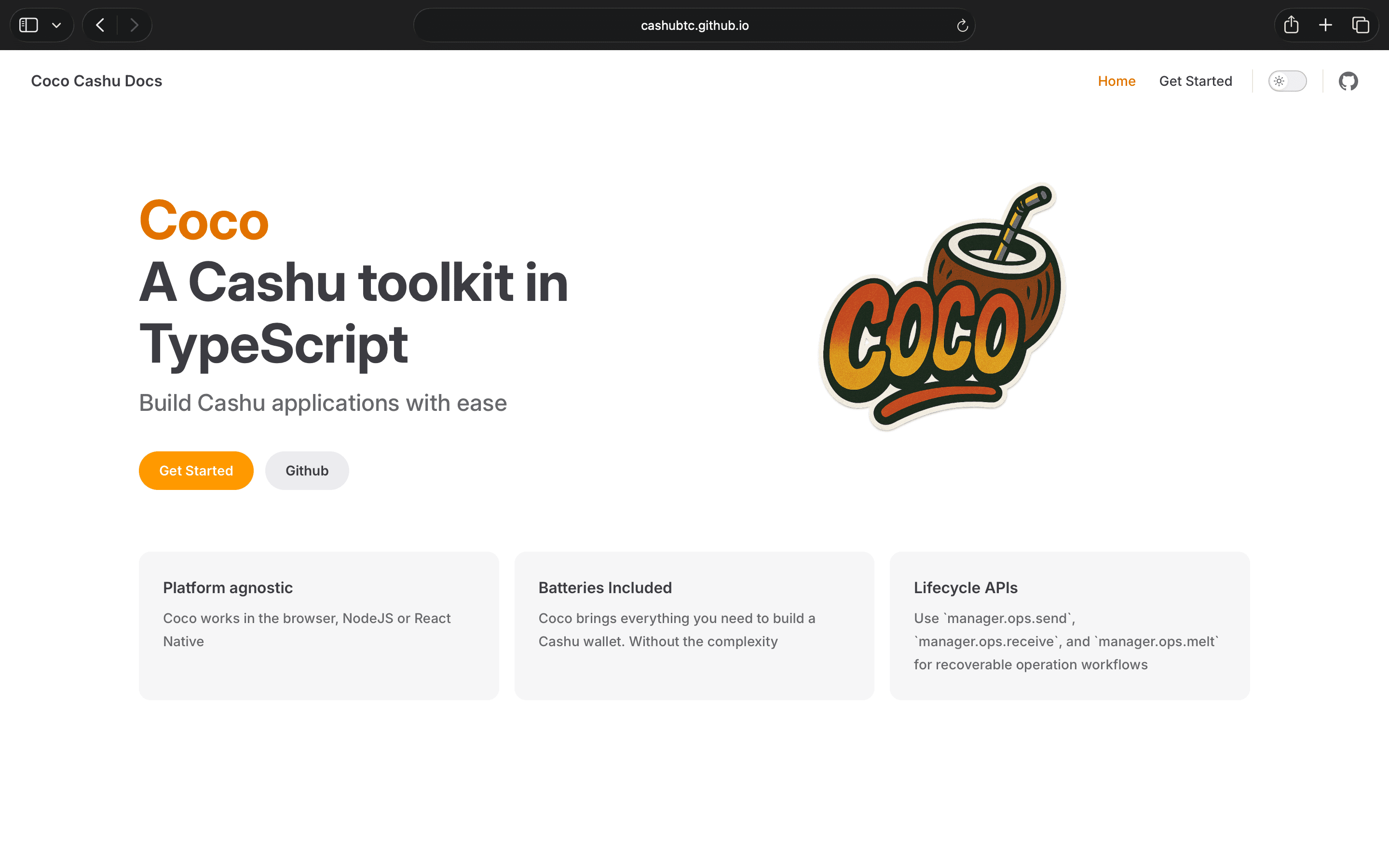
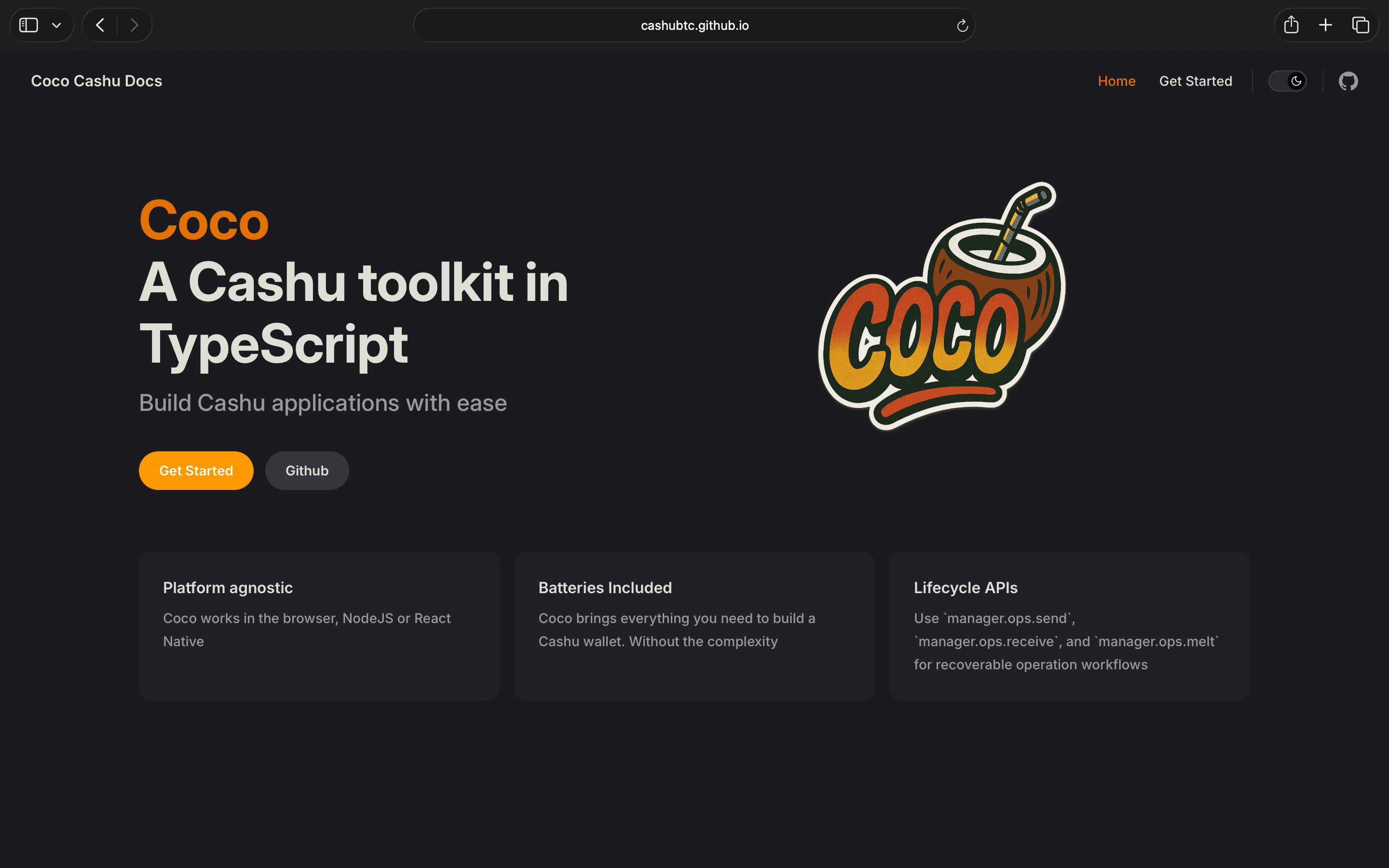
His focus now is making Coco the best possible library to build on Cashu. To do so, he needs feedback from contributors, testers, and adopters: “Coco is still young. While most of its primitives have already been battle-tested, the library itself has not yet been tested as widely in real-world applications.”
Even more so, when working in a rapidly changing environment, like Cashu: “Staying close to the cutting edge while also improving the sturdiness and ergonomics of a library is difficult.” Any help is appreciated: “If you are a developer and find some time to play around with Coco, I would really appreciate any feedback.”
Despite his success and recent grant renewal, uncertainty still keeps Egge up at night. “Working in Bitcoin, especially on a grant basis, comes with the challenge of staying relevant and renewing your support regularly”, he notes.
During the most difficult times, he is able to find his strength in the hope to build a better world for his daughter, who he lovingly calls his “amazing little girl”. He believes “the technology we are building as an industry will improve the lives of many people around the world”.
But change doesn’t happen by itself. It needs people investing their time into building those technologies that, in Egge’s eyes, will make the future brighter. Bitcoin needs more people working on it. “Not only developers, but people in many different areas. There is so much work to be done across so many different fields.”
“Cypherpunks write code”, as Eric Hughes stated in his A Cypherpunk Manifesto. However, writing code is not the only thing that can help Bitcoin thrive. It needs educators, marketers, designers, and all the talented people out there. Egge’s journey is a good reminder that anyone can have a real chance and a real impact in this space. “I would encourage anyone who wants to give it a try to do it”, he says.